Category: The Doctors
The Vague Vengeance of Peter Grimwade

by DenValdron

The Grimwade story is an interesting one. Like many of the show’s figures, his career with Doctor Who spans an immense period of time.
His first work on Doctor Who was as a production assistant on Spearhead From Space, with Jon Pertwee. He followed it up with a similar position on The Daemons, also with Pertwee.
From there, he jumped to the Tom Baker Doctor, again, a production assistant and precociously directed the miniature shots for Baker’s first serial, Robot. He was production assistant for Pyramids of Mars, Robots of Death and Horror of Fang Rock, which, if you have to be connected, is a pretty damned good trinity.
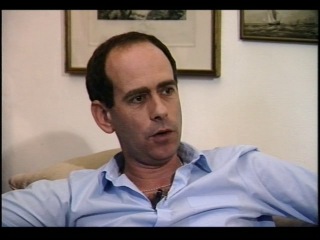
In Robots of Death, he achieved a sort of notoriety, when Tom Baker ad libbed ‘Grimwade’s Syndrome’ as the name for a pathological fear of robots.
But he wasn’t just a production assistant. Peter was kind of a jack of all trades. As early as 1969 and 1971, he was getting professional writing credits on productions of Z Cars and Spare the Rod. He was an enthusiastic young man. In the late seventies, he submitted a proposal for a script called Zanedin, which was almost accepted. He took the BBC’s in-house Director’s workshop program.
And he got to know John Nathan Turner, when the two of them were working on All Creatures Great and Small, starring Peter Davison. For Turner, Grimwade was in the sweet spot. Turner wanted to bring new blood into Doctor Who – new writers, new directors, out with the old and in with the new. Sometimes that worked brilliantly, sometimes it was disastrous. But the bottom line, Turner wanted to shake things up. At the same time, Doctor Who was, even then, perhaps especially then, a peculiar thing, not everyone had the hang of it.
With Grimwade, he had a young man who actually had real history of the show, who had worked with Baker and Pertwee on some of their best serials, but was for creative purposes, new blood.
So Grimwade got his first chance to direct: Full Circle, 1980, the first serial in the E-Space trilogy, from Tom Baker’s final season. It’s not bad, it’s a mysterious and moody piece that’s quite well done, though it tends to stand in the shadow of Warrior’s Gate. It’s also known for introducing Adric, as a sort of fish-man evolved to full pseudo-humanity.
That went well enough that he was assigned to direct Logopolis, in 1981, Tom Baker’s final serial. Logopolis was marked by little production crises, the house originally set to be shot in was not available. A police box was in a state of disrepair. Grimwade handled these challenges with aplomb, basically, all that time in the trenches as a production assistant paid off.
In 1982, Grimwade directed Peter Davison’s Kinda, a very unusual story, full of buddhist overtones, with the Doctor and his companions encountering a psychic creature of evil, the Mara, who would possess Tegan. The Mara came back the next year for Snakedance. Personally, didn’t really get into it. But it was both an unusual story and a very well done production.
From there, Grimwade went on to direct Earthshock – and what is there to say about that? Brilliant direction, sterling performances, the surprise return of the Cybermen, it had been seven years since their previous outing with Tom Baker in 1975’s Revenge of the Cybermen, and fourteen years since their last story before that, in 1968’s Invasion. It also featured the death of Adric and the extinction of the Dinosaurs. It was a tour de force.
It was also kind of ironic when you think about it. As a Director, Grimwade had helmed Adric and Matthew Waterhouse’s entry into the Doctor Who Universe, in Full Circle, and then ushered him out in Earthshock.
While all this was going on, his script Zanedin was working its way through the bowels of the system, finally being produced as Time-Flight, a somewhat muddled story of a Concorde supersonic passenger jet being kidnapped into the Jurassic by a mysterious alien force which turns out to be the Master.
Okay, I’ve been waiting to say this for years – But if you’re going to throw a story into the Mesozoic era, there’d better be some fracking dinosaurs! Jurassic, people, Jurassic! I’m not fussy, I don’t need T-Rex. Stick a few sauropods, an iguanadon, a pterodactyl, have a stegosaur lumber through the frame. Throw us a bone! And if you’re not going to throw in some dinos… Don’t go their. Set it in the precambrian, or the ‘earth was a lifeless desert’ or the ‘marshes and slime molds’ era. But don’t go Jurassic, and then screw us out of dinosaurs. Really!
Time-Flight was initially quite well received, but it hasn’t actually stood the test of time very well. There’s some interesting things going on, the fact that the crew and passengers of the Concorde, trapped in a Jurassic world, are mesmerized into believing they’re at Heathrow, that’s odd and creepy. But there are too many negatives. The script has clearly been in the oven far too long, its been polished too much, too many revisions and alterations, it’s gotten mushy. It also suffers from ‘end of season-itis’ – when the budget is mostly blown and everything has to be done cheap and fast.
For me (…. must…. not… rant… about … dinosaurs… again!), the big problem with Time-Flight is ‘Didn’t we just watch this?” Think about it: Mysterious alien enemy which turns out to be a familiar old foe, a mysterious time warp, a detour to the Mesozoic – it feels like the same key elements. It’s like the way McCoy followed Remembrance of the Daleks with Silver Nemesis.
Davison’s first year had been a good year for Grimwade. Of the seven serials of that season, Grimwade had accounted for three – two directed, one written. Maybe too good a year. This was the John Nathan Turner era, and Turner was… Well, a personality. The Baker years had come to be overshadowed by Tom Baker’s ego. The Turner era would see three different Doctors, but the real dominant personality, the real ego of the series, was Turner – brash, domineering, arrogant, indifferent, Doctor Who was his baby. A lot of the desire to throw out so much of the old was to eliminate rivals, to make the show his and his alone. Basically, Turner didn’t really have room for anyone but Turner. So being too successful, too dynamic, too forceful or regarded as a creative force in the show… Well, jealousy started up.
 1
1
For the next season, 1983, Grimwade had a second script accepted: Mawydryn Undead, a complex time travel story, featuring the return of the Brigadier, the introduction of Turlough, and a strange and tragic group of lost dutchmen.
Grimwade was also slated to direct the final serial of the year, The Return, to feature the return of the Daleks. Unfortunately, labour troubles intervened. The Return was cancelled, literally two days before shooting was to start. Everyone was out of a job.
To console people, Grimwood took the cast and crew out for lunch. Turner wasn’t invited. The intent, we’re told, is that Grimwade had intended to have Turner out for a private supper. That doesn’t seem implausible. But Turner took it as a deliberate insult, and that was that.
The Return eventually made it onto the third year roster, as Resurrection of the Daleks, directed by someone else.
Eric Saward, the Story Editor, whose relationship with Turner was also deteriorating steadily, tried to bring him back as writer for Planet of Fire, Davison’s second last serial in 1984. Planet of Fire, ironically, saw the departure of Mark Strickson, and his character, Turlough. As with Waterhouse, Grimwade had ushered him in, and ushered him out.
Planet of Fire turned out to be a bit of a nightmare. Changing circumstances ensured constant rewrites and very little support. The production was being shot on Lanzerotte in the Canary Islands, but Grimwade was specifically excluded from the junket by Turner. Instead, he was asked to do a location script for a location he wasn’t allowed to visit. Eventually, Grimwade just let Saward rewrite it as he wished.
That was about it. Grimwade submitted one more story, the League of Tancred, which was kicked around for a while, but eventually rejected. But his career and association with Doctor Who was largely over. He wrote novelizations of his three scripts, something Turner had no control over in 1985, but he was largely absent from television, either as a writer or director after 1984.
Peter Grimwade spent most of the rest of his career directing industrial films, which, I suppose pays the bills. But it’s hard to think of it as a preferred career choice. He died of Leukemia at the age of 47 in 1990.
So what did it come down to? Directed four serials with Tom Baker and Peter Davison, wrote three scripts for Peter Davison, wrote three novels based on those scripts, worked production on six of Pertwee’s and Baker’s best serials, and had one unmade script, that’s not a bad career, all things considered. I’m willing to give him a big pass on Time-Flight, it’s a first script, and a lot of what goes wrong doesn’t really fall on his lap. But you have to wonder, he showed a lot of talent as a director and writer, handling very difficult material adeptly, if not for Turner’s ego… What might he have done, what could he have written or directed or contributed to the later floundering seasons of the classic series. But that career was over.
In 1986, Peter Grimwade, revenge came in the form of “The Come-Uppance of Captain Katt.”
Okay – Captain Katt is an incredibly popular space opera on a private television station. The Actor who plays Captain Katt is a beloved celebrity, wildly popular with kids, perpetually in demand for things like supermarket openings, and a gigantic dickhead. Also, someone is trying to kill him. The half hour story switches back and forth between the show and the production of the show, as we find out that just about everyone wants him dead.
“The Come-Uppance of Captain Katt” was written and directed by Peter Grimwade as part of ITV (a rival British network)’s ‘Dramarama’ youth program. Dramarama seems to have been a half hour children’s anthology series – each episode was a stand alone story. “Captain Katt” was the lead episode of series four.
Basically, what Grimwade did was take all his experiences working on Doctor Who, his observations, frustrations, everything, and pour it into ‘Captain Katt’ as a sort of Anti-Valentine. He was pretty honest about it too. If anyone asked him, he’d be quite upfront in admitting he drew on his experiences with Doctor Who.
Is it nasty? Well, there was a limit to how vicious you could be, or how polished. This was a low budget youth oriented one-off program after all, and half an our really doesn’t allow you to develop the characters of a large cast, or really explore the complex premise he sets out. But if you allow for the limitations, it’s definitely got an edge.
There’s no laugh track, instead, you either get the gags or you don’t. Shot as a drama, I think some of the comedy beats are off. Alfred Marks who plays Captain Katt and his alter ego is a human train wreck, utterly self absorbed, insecure, bullying, greedy and grasping, he’s a figure of titanic ego, a man lost in his own imaginary glory. He’s clearly a reflection of Tom Baker in his final year as well as John Nathan Turner. His opposite number is his savage alien companion, Mugwump, played by Ros Simmons, a stand in for hapless companions from K9 to Adric. Watching it, we can’t help but wonder about the rest of the cast and crew, who they represent, what incidents and moments from Doctor Who have been borrowed. It would be great to see an annotated version. It’s a lot of fun.
So check it out….
The Trods of Trodos – Doctor Who’s ‘Also-Ran’ monsters…
by DenValdron
The Trodos Tyranny -https://whopix.wordpress.com/2015/01/17/dr-who-in-the-trodos-tyranny/
Return of the Trods -http://img3.wikia.nocookie.net/__cb20110104182443/tardis/images/7/78/Trod.png
The Trodos Ambush -https://whopix.wordpress.com/2015/01/24/dr-who-in-the-trodos-ambush/
Pursued by the Trods – https://whopix.wordpress.com/2015/02/14/dr-who-in-pursued-by-the-trods/
The Time Museum – https://whopix.wordpress.com/2015/02/22/dr-who-in-the-time-museum/
Take it with a grain of salt. These comics are the products of a different era, a different culture. The stories are brief, almost superficial. They’re like potato chips, more food-like than food. There’s a sense of brevity to the things, I think that an average story would be hard pressed to translate into a fifteen minute episode. They weren’t great literature, even for their time. But, I think for the people who grew up with them, they were probably pretty terrific.
FAN FILM REVIEWS: HOW TO STOP A TIME LORD
by DenValdron
Story: The Tenant and Smith Doctors end up materializing in at an empty school to solve a mystery and learn a thing or two about life…
Review: This is simply exquisite. Very well acted, great chemistry, well shot, well edited, the writing is terrific, and it captures both the humour and the sweetness that is at the heart of Doctor Who. It is an honest pleasure.
That’s really all the review you need.
Go watch it.
Now.
FOR MORE INFORMATION ON THE CONSTANTINESCU BOYS….
http://silverwolfpet.com/
WATCH IT HERE
http://silverwolfpet.com/doctor-who-fan-film-how-to-stop-a-timelord/
FAN FILM REVIEWS: REAL DOCTORS, FAN STORIES – GENE GENIUS
by DenValdron
STORY: The Seventh Doctor and Ace are attending a breakfast at an old friends place. The Doctor reminisces about how, the last time he was here, in the 1970’s, things got quite sticky. As he flashes back, we see the Third Doctor, riding Bessie to his next adventure….
REVIEW: All right – I’m going to review this one out of order. Gene Genius is a product of a group or collective that goes by the name ‘The Projection Room’ – they seem to have formed around 1994, the same time as Timebase Productions, probably for the same underlying reasons, and their output is comparable in volume, if not necessarily quality. I assume they started for the same reason – the aborted revival and implosion of 1993. The key person seems to be Chris Hoyle, but really, it’s a collective effort.
Gene Genius is one of their later era productions. Really, I suppose I should be watching and reviewing their stuff in order. Why am I jumping the queu? A couple of reasons. First, it seems to be out of continuity with most of Hoyle’s work – you don’t miss anything by not having watched the previous adventures. It’s a safe stand-alone.
Mostly though, it’s because Sylvester McCoy plays the Doctor and Sophie Aldred reprises Ace in it. That’s right: The real actors are playing their characters in a fan film. WTF?
Aldred and McCoy are basically there for a framing sequence. They’re visiting for breakfast at some friends, and McCoy starts to reminisce about some adventure they had the last time they were there, back in the 1970’s. Cue flashback. At the end of the serial, the story returns to them, and they’re back again, to join the action and help wrap things up.
In the main body of the story, doing most of the heavy lifting, we have John Field playing Jon Pertwee, playing the Third Doctor. I had no idea who John Field was, but I googled he was known for dressing up as the Third Doctor, for the Doctor Who Experience in Llangollen.
I had no idea what that was, so I looked it up. It turns out that the Doctor Who Experience in Llangollen was one of the largest exhibition of original props from the series, covering 6000 square feet. Open year round from 1995 to 2003, it averaged about 50,000.00 visitors a year.
So I imagine that John Field was dressing up as the Doctor because at least part of his work was as a host for the Exhibition. It was an actual paying gig – so he has some credit as a semi-professional Third Doctor. John’s connection to the Experience might explain some of the props seen in Gene Genius. By all accounts, he seems to be a charming fellow, nice guy and longtime fan……………..
Episode 2
https://www.youtube.com/watch?v=LkbDGO_KwCM
Episode 3
FAN FILM REVIEWS – THE FEMALE DOCTOR 2 – VISIONS OF UTOMU
by DenValdron
Synopsis: On the planet far, far away, two medieval Kingdoms, Desarn are attempting to seal a peace treaty with a royal marriage between Prince Germain and Princess Aldriana. It’s not working out well, the Princess is kind of butch, the Prince definitely isn’t. Things go wrong when the evil Wizard Utomu’s henchman, Formor, breaks in and kidnaps the Prince. The Doctor is enlisted to rescue the Prince, with the aid of some song and dance…
Review: Visions of Utomu trades a lot on the goodwill of Wrath of Eukor. Eukor is so well done, that we’ve built up an affection for the characters, we’re willing to be forgiving. If Utomu had come first, I’m not sure that it would have worked as well. Or maybe it might have worked better. Eukor casts a shadow, without it, maybe the flaws and faults of Utomu wouldn’t have been so glaring in comparison. As it is, Utomu suffers a bit from little brother syndrome, it’s always going to be seen as the lesser work.
Utomu, in terms of performance, production values and cinematography is simply a less polished work. Sometimes a lot less polished. I think it’s because they got ambitious here, and their ambition dramatically outran their money and abilities. Utomu had several key swerves from Eukor that, I think, undermined it. It switched from 16 mm film to 3/4 commercial videotape, for instance. That saved a lot of money on lab and processing costs, but perhaps lost a bit in image quality. They also decided to shift from a location backed story to a set-based production, and building sets, building good sets is hard. The cast is larger, there’s a lot of extras but often not used well, they play with a lot more ideas.
In terms of the fandom splash, the female Doctor was making, Utomu’s timing was on. Filmed November, 1985, and released January, 1986, the future of the Doctor was still up in the air. The hiatus would not end, and Trial of a Time Lord would not begin until September, 1986.
Let’s just tag our way through the good and the bad.
The Bad: Those sets! Ouch! What it looks like is a handful of flats, painted in a stylized manner to suggest brick work, with some styrofoam blocks thrown on here and there. What it reminds me most of is a theatrical set, stylized, lightweight, moveable and designed for a stage, and a more forgiving stage audience.
Except that we aren’t a stage audience, and we’re expecting a higher degree of cinematic realism. The artificiality of the flats really is jarring, its like biting on tinfoil. To make matters worse, initially, they shoot it in the worst possible way, just glaring lighting, flat and bright, that really makes it impossible to see it as anything but fake and artificial. It’s heartbreaking to think of how hard they must have worked to make something that looks so crap.
It’s particularly damning because this is actually the sort of sets or locations that the BBC was good at. England is lousy with castles and immense brickwork monstrosities, so they have a lot to choose from, and even when they’re shooting in studio, they have enough experience with how they look and how to shoot them effectively, that they carry it off. So they’re falling afoul of our subconscious expectations, as much as if they accidentally painted the Tardis orange.
Oddly, as the episode goes on, they seem to get better at it. They play with the lighting, darkening the flats, focusing on foreground characters and blurring the background, filming action to emphasize movement. It’s as if we’re watching them learn how to shoot these flats. The sets, for the most part, stop being disconcerting and jarring. Possibly we’ve been beaten into submission. Or more likely, they’re just doing it better – shooting and lighting them properly and focusing better on the story and characters, so that it’s generally stronger later on. But still, getting better later on only buys you so much, when you set your foot badly wrong on your first step, its hard to recover from.
That’s how it is when you’re working with sets. Sometimes you get the bear, sometimes the bear gets you. Doctor Who has had its share of stylized or tosh sets. Sometimes you can dress them up, sometimes you can work around them, sometimes they just don’t work that well, but you have to forgive them. In this case, it slipped by them. It’s a medieval setting – back in those days, no central heating, people were always hanging curtains and tapestries and drapes off the wall, tarting things up by hanging weapons and clothes and tools. They could have tried that, but they didn’t. So I’ll tell you right now, be ready to dip into the pocket of forgiveness on this point.
To be really fair – remember that mostly, this was being shown on mid-1980’s, 12 to 24 inch colour television sets, not high def or high resolution, and often being shown in crowded rooms at gatherings of fans. So it may not have been as jarring back then. There’s a lot of stuff that looked okay on the old scan line/cathode ray televisions that is now pretty blatant on higher resolutions and higher definition.
What else? Randy Rogel’s choreography… Just not up to the job. Sorry. It’s one of those things where they bite off more than they can chew, when what carries in the script can’t carry in real. What hurts is that Randy wanted to do it. He was pushing to do a song and dance number. Kind of a mistake there.
Again, inexperience kind of hurts. Kinetic stuff, fight scenes, dance numbers, they’re tricky to shoot. You can’t actually just have the camera sitting there. It has to almost be a character, and the dancer or the fighter has to play to it as much as they simply do their stuff. From what I understand of the shooting, they didn’t really have the time or resources to do it right, and frankly, I don’t think they understood what they were getting into. Time to dip into that pocket of forgiveness again.
So that’s a pair of really harsh flaws to get caught between, and you really have to make the decision to let them slide in order to enjoy the story.
Beyond that, the acting is variable. Some of the performances and direction seem appropriate to a high school play, there’s some awkward blocking. There’s problems with the sound quality – there’s a point for instance, where Utomo’s voice seems patchy. In an early scene, they’ve got a crowd running around in panic – it’s just harsh.
I dunno though, maybe I’m too critical. I could see some people not even noticing these things, just delving right into the story and grooving to the light, breezy touch.
With a little forgiveness, Visions of Utomu is actually quite good. A major strength: The costumes and props. We got medieval stuff coming on strong here. Initially, I looked at the great costumes and the fake set flats, and thought maybe he’d hooked up with some kind of stage company that had done a medieval or shakespearean production.
But no, Johnson managed to link up with the Society for Creative Anachronism, so the result is that we’ve got some very sharp, nice quality costumes, and an impressively large cast of extras that, sadly are not used to full effect.
As I’ve said, the cinematography does pick up as we go along, with increasingly effective use of light and shadows. The production overall, seems uneven. There’s shots and scenes and transitions that are amazingly good – the zoom in on the henchman as Carl does his dance routine, shows us a man being captivated – that’s beautifully done. Or almost every scene or shot where Rice is playing the villainous Utomu. The first scene between the Prince and Utomu, there’s a wind sound foleyed in, it’s subtle, but chilling. The background music is well used, never so loud as to call attention to itself, and almost always just right for whatever they want to convey in the moment.
The script is equal parts witty and convoluted. But it works, and on the whole, I think it works a lot more often than it doesn’t. Does it transcend its flaws? That’s a judgement call.
For the most part, the actors acquit their roles nicely. Benedetti and Rogel as the Doctor and Carl have some really nice chemistry going on. It’s amazing to see how well they work together, putting in all these little visual gags and witticisms. That really is the consistent highlight of the whole series. Benedetti is one of the best fan Doctors. I don’t think she’s the best, that goes to Rupert Booth. But the Doctor/Companion thing she has going on with Rogel, that’s unparalleled.
Wesley Rice as the evil wizard Utomu is also a standout, he manages to convey intelligence and menace, and he’s got some very nice bits of stagecraft going on, despite not moving around too much. That’s the lovely thing with stage actors. They know how to work business.
There’s a nice bit of gender role reversal – the Prince, played by Robert Eustace, is in the essentially feminine role, he’s quiet, bookish, all about feelings, physically tentative and is the one who gets kidnapped. The Princess, played by Stasia Johnson, is active, joins in the rescue and is a bit of a hellion. The performance of Jim Dean as the King is a mirror opposite of Rice’s – he’s doing a light comedy character with a very deft touch. Jim Dean, by the way, played the survivalist/vietnam Vet, Grant, in Eukor.
There’s a strong sense of fun – people are dressing up and going in disguises, and seeing through each other’s disguises. Everyone’s got a smart line they’re tossing off, there’s double takes, and ‘oh whoops’ moments, and a whole series of visual gags. What can you say when the plot hinges on sneaking into the Wizard’s castle disguised as a song and dance duo? This is Bob Hope and Bing Crosby territory.
Thats saves Utomu, what makes it work for me. Its tongue is firmly in its cheek. It’s a light comedy, good hearted, with a wink and a smile. Eukor was a serious story with a few comic touches – let’s face it half the cast dies and the story is about a body snatching alien menace. Utomu, in contrast, is light – the opening scene is a clip from Singing in the Rain, it’s full of comic touches, and the climactic battle is outright slapstick. It’s got just enough darkness, in the form of the wizard Utomu to keep it grounded and moving, otherwise it might have floated away on its own lightness.
Visions of Utomu finishes up as a pretty good Doctor Who story. On its own merits it has real strengths. It’s imminently watchable. Utomu doesn’t do everything well, but it does a lot well. What it comes down to, do we notice and work to the terrific costumes and performances, or do we dwell on those awful faux walls, or the flubs in the sound or an awkward edit? Take your pick. For me, the cheerful amiability rules, it’s a Gene Kelly sort of story. Eukor you appreciate, but somehow it’s Utomu that puts a smile on your face.
Statistics: 32 minutes. 3/4″ videotape. Filmed November 1985, released January 1986.
Cast. . . Barbara Benedetti as The Doctor, Randy Rogel as Carl Evans, Wesley Rice as Utomu, Stasia Johnson (no relation) as Princess Aldraina, Robert Eustace as Prince Germain, Jim Dean as the King, Randy Dixon as the M.C., Joseph McCarthy as Formore, and an orange. Written, Produced and Directed by Ryan K. Johnson.
FOR MORE INFORMATION
http://www.eskimo.com/~rkj/doctor.html#Visions
WATCH IT
“Welcome to my world”: a dialogue on choices

Clara: I just hope I can keep them alive.
Doctor: Ah, welcome to my world.
And welcome, one and all, to a debate which drifted across several episodes and at least two episode forums. For the ease and edification of those who were trying to follow it, and with the agreement of the main participants, I’ve now compiled it in one blog.
Have fun. And remember: always consult The Doctor before ingesting hemlock. 😉
Jimbo McMaster
Just like to say that I’m happy that this episode (and this series) has dealt with the whole sometimes-you-have-to-do-bad-things-for-the-greater-good issue, which I think is ignored in earlier eras of the show. The kind of life the Doctor leads would require him to sometimes make these sorts of choices a lot more often than, say, the Russell T Davies era ever made him do (I don’t think there are any examples at all in Nine or Ten’s adventures, although admittedly the destroying-all-the-Time-Lords-thing is a good example of that sort of decision-making, albeit off-screen). Read more…
Paul McGann : Doctor What Now?

by HTPBDET
Time moved slowly in The Cancellation Years.
My son and I got on with life and it is fair to say we became closer because of what we had lost. Equally, though, it was at least 1990 before I laughed properly again since that Wednesday afternoon during Curse of Fenric.
Much irritated me – all too easily. When they deviated from what I remembered from the broadcast series, the Target novels irritated me. When the VHS releases did not contain separate episodes with their cliff-hanger endings, the BBC irritated me. When Doctor Who Monthly set about creating the opinions it expected fans to have, it irritated me.
Fandom itself irritated me.
Sylvester McCoy: The Enigmatic Philosophic Warmonger
by HTPBDET
It was a very strange time, that long period between Ultimate Foe and the start of Time and the Rani.
Four children, a remarkably happy and thriving career in theatre and television (now more writing, directing and producing rather than acting) – and no Doctor Who. I missed it – but I preferred it ended to continuing as it had been under JNT and Colin Baker.
Then three things happened within the space of 6 months.
Colin Baker: The Garish Bully
by HTPBDET
Posted by Craig in HTPBDET’s absence
DOCTOR: You may not believe this, but I have fully stabilised.
PERI: Then I suggest you take a crash course in manners.
DOCTOR: You seem to forget, Peri, I’m not only from another culture but another planet. I am, in your terms, an alien. I am therefore bound to different values and customs.
PERI: Your former self was polite enough.
DOCTOR: At such a cost. I was on the verge of becoming neurotic.
PERI: We all have to repress our feelings from time to time. I suggest you get back into the habit.
DOCTOR: And I would suggest, Peri, that you wait a little before criticising my new persona. You may well find it isn’t quite as disagreeable as you think.
PERI: Well, I hope so.
DOCTOR: Whatever else happens, I am the Doctor, whether you like it or not.
And there it was, the end of Twin Dilemma the first story of the Sixth incarnation of the Doctor and a direct challenge to fandom and viewers generally: JNT saying in very unequivocal terms: “Tough luck if you don’t like the new Doctor – just put up with it”.
Davison: The Honourable Assassin
by HTPBDET
By the time Castrovalva came along, I was a father and my first son ( then 2) reacted very favourably to the Doctor Who theme tune and so my memories of the Davison era are indelibly linked to him sitting on my lap, pointing at the screen, burying his head in my chest or calling out “Doc-Doc Whooooo”.
I was ready for change, had been really since Armageddon Factor. Tom Baker stayed too long and people seemed to think he WAS the Doctor.
He wasn’t.
And Peter Davison, quietly but forcefully, showed precisely why.